Hazardous Materials That Require Certified Handling
Lead and Asbestos Abatement in Billings for properties where testing confirms hazardous materials and removal becomes necessary
DCR is a licensed and insured Billings company providing both lead and asbestos testing and abatement when hazardous materials are identified in residential, commercial, or restoration properties. The team collects samples from suspected materials and submits them to third-party laboratories for analysis, maintaining the separation between sample collection and testing that ensures unbiased results. When laboratory analysis confirms the presence of lead paint or asbestos-containing materials, Disaster Cleanup and Restoration moves directly into abatement work, handling removal and disposal according to the careful protocols that hazardous material regulations require.
Testing serves as the essential first step before abatement begins, establishing whether materials actually contain lead or asbestos rather than assuming hazards based solely on building age or appearance. Sample collection targets suspected materials such as floor tiles, pipe insulation, textured coatings, or deteriorating paint, with collected samples delivered to independent laboratories that perform the chemical analysis. This approach gives property owners definitive answers about what materials require abatement and what components can be handled through standard renovation practices.
Contact DCR to discuss your property and determine whether an onsite assessment and sample collection are appropriate before abatement work begins.
How Lead and Asbestos Removal Addresses Confirmed Hazards
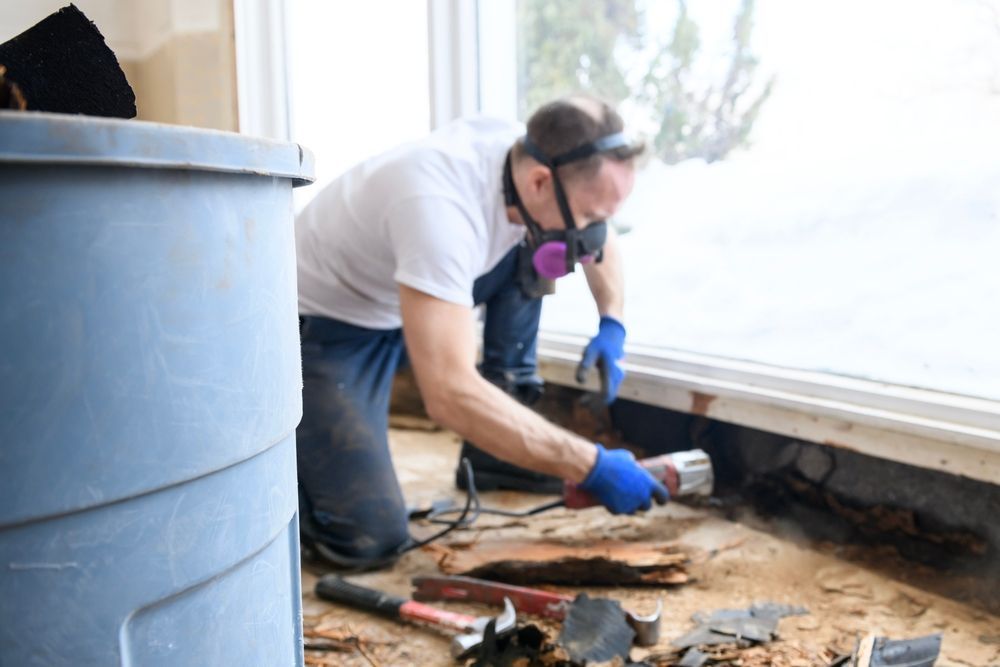
Abatement begins after laboratory testing confirms that materials contain lead or asbestos, with removal work focused on careful handling that prevents fiber release or lead dust dispersion during the extraction process. The work involves isolating affected areas, removing confirmed hazardous materials using methods appropriate to the material type and condition, and disposing of collected waste through channels designated for regulated substances.
Once abatement completes, you no longer face exposure risks from deteriorating lead paint or friable asbestos materials, and renovation or restoration work can proceed without the containment protocols that hazardous material presence would otherwise require. Disaster Cleanup and Restoration provides documentation showing what materials were removed, how disposal occurred, and that the work followed applicable standards, giving property managers and contractors the clearance records they need to move forward with construction or property transfers.
The company also offers sample collection services for restoration contractors, property managers, and other professionals who need qualified sampling but prefer to work with their own testing laboratories or abatement providers. This arrangement allows experienced property managers to submit photos and project details for initial evaluation when they have sufficient documentation, though onsite visits generally provide greater accuracy for assessing materials and establishing sampling locations than homeowner photos alone can deliver.
What Property Owners Usually Ask
Lead and asbestos services raise questions about testing procedures, who performs laboratory analysis, how abatement differs from testing, and how estimates work for properties located beyond Billings' immediate area.
What is the difference between sample collection and laboratory testing?
Disaster Cleanup and Restoration collects material samples from suspected lead or asbestos sources and submits them to third-party laboratories that perform the chemical analysis, maintaining independence between the company that gathers samples and the facility that determines whether hazardous materials are present.
How does the abatement process begin once testing confirms hazardous materials?
After laboratory results identify lead or asbestos, the abatement phase addresses removal of confirmed materials using careful handling methods, with the same company that collected samples able to transition directly into the removal work without requiring a separate contractor.
When should property owners schedule an onsite assessment in Billings?
An in-person visit provides the most accurate evaluation when materials are difficult to identify from photos, when sampling locations need to be determined across multiple building areas, or when the scope of potential abatement requires direct inspection to establish an accurate estimate.
Why would another company request sample collection services?
Restoration contractors and property managers sometimes need independent sample collection to support projects where they prefer to use their own testing laboratories or abatement teams, with Disaster Cleanup and Restoration providing the certified sampling that maintains the separation between collection and analysis.
How do estimates work for properties outside the 70-mile radius around Billings?
The company offers free estimates within 70 miles, while properties beyond that distance incur a $100 charge to help cover fuel costs, with that amount credited toward the final bill when the customer hires Disaster Cleanup and Restoration for the testing or abatement work.
Properties throughout Billings and surrounding Montana communities that contain suspected lead or asbestos materials require certified sample collection and, when testing confirms hazards, careful abatement that removes risks before renovation or occupancy proceeds. Disaster Cleanup and Restoration handles both the testing and removal phases—reach out to discuss whether your property requires an onsite assessment, establish the sampling approach, and determine the next steps before abatement begins.